How much does it cost to fix a blocked drain?
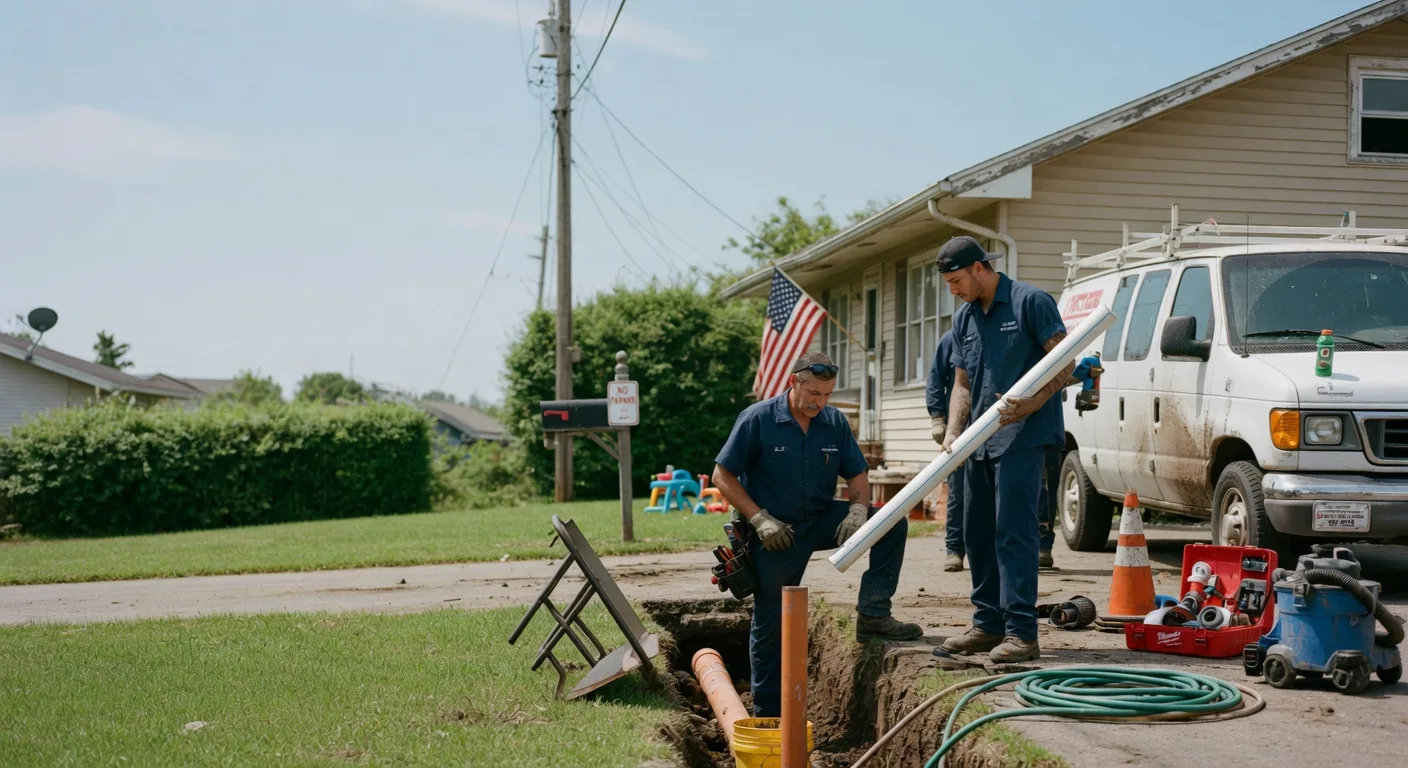
Expert Plumbers Co does not set or quote prices. It connects you with an independent local plumber, and that plumber names the number after seeing the actual problem. Several things drive the cost of a blocked drain. The first is where the clog sits. One slow sink with hair a few feet past the trap is a short cable job, while every drain in the house backing up points to the main line, which needs larger equipment and more time. The second is access. A clear, reachable cleanout keeps the work simple; if the plumber has to pull a toilet to reach the line, that adds labor. The third is the method. A cable machine punches a channel through a clog, hydro jetting scours the full pipe wall, and a camera inspection shows the pipe's condition so the plumber can tell whether cleaning is enough. The fourth is the pipe itself. Roots in clay joints, scale inside cast iron, or a bellied section holding water can turn a cleaning into a repair, and repairs bring in digging or lining, materials, and sometimes a permit. A plumber in Bogue, KS can narrow this down quickly once you say which fixtures are affected and how long it has been going on.
Before the plumber arrives, write down a few facts that shape the scope of work. Note which fixtures are affected, when the problem started, and whether anything unusual went down the drain beforehand, such as wipes, a large amount of grease, or a child's toy. Find the cleanout, which is usually a capped pipe in the basement, the crawlspace, or outside near the foundation, and clear a path to it. Tell the plumber about any past backups or earlier repairs on that line. Ask them to explain the method before starting, and to say what the next step would be if the first approach does not clear the line. If a camera is used, ask to see the footage so you understand what is wrong. Any work beyond cleaning should be described to you before it begins, including how much has to be opened up and whether a permit applies.
How do I know if tree roots have gotten into my sewer line?
Tree roots get into a sewer line through a hairline crack or a loose joint. Clay pipe is the usual victim because it is laid in short sections, so there is a joint every few feet for a root tip to find. Roots follow moisture, so a strand enters, thickens, and starts catching paper and grease until flow stops. Warning signs are a main line that clogs on a predictable schedule, gurgling from drains near large trees, and a cable machine that keeps stopping at the same distance. One slow fixture is rarely roots. Several drains slowing together, or a basement floor drain that rises, points to the main line where roots live. A cable with a cutting head opens a channel through the mass for temporary relief, and hydro jetting scours the pipe wall more completely, but neither seals the entry point, so the roots return. A camera inspection shows the crack or joint, how much root is present, and the pipe's condition, which decides whether periodic cutting is enough or a section needs repair. Access and the length of pipe involved drive that cost. PVC resists root entry far better than clay. For a suspected root problem in Bogue, KS, Expert Plumbers Co connects you with an independent local plumber.
Prevention around trees is worth knowing about, because the root itself is rarely the whole story. Not every tree is a threat, and removing one is rarely the right first step, since the roots already in the pipe do not stop growing and the pipe's joints stay open. Willows, maples, poplars, and similar fast growers tend to be the worst for seeking out sewer lines, but any large tree in a dry spell can send roots to a pipe that holds moisture. Avoid pouring rock salt or copper sulfate products into toilets without asking a plumber first, since they can harm pipe and the wider water system. Keep records of when the line was last cut or jetted. If the intervals between clogs are getting shorter, that is a sign the root mass is thickening and a repair may soon be better value than repeated cleaning. Ask the plumber about replacement options.
Sewage has backed up into my basement. What do I do right now?
Stop running water in the house now. That means toilets, sinks, showers, the washing machine and the dishwasher. Every gallon you send down the line has nowhere to go but out through the lowest opening, which is your basement floor drain.
Stay out of the water. Keep children and pets away. If you must go in, wear boots and gloves, and do not touch outlets or appliances while standing in it. Do not pour chemical cleaners down any drain.
One safe check: look at whether other drains upstairs are gurgling or slow. If they are, the main sewer lateral is blocked or failing. Typical causes are root intrusion at a clay joint, grease build-up on the pipe wall, a bellied line holding water, or a collapsed section. A single slow fixture is a branch line problem. A basement backing up with the whole house affected is a main line problem, and it needs different equipment.
This is Emergency Drain Cleaning, and it is not a homeowner job. A cable machine at the cleanout can clear a soft blockage. Roots and grease usually need hydro jetting, and a camera inspection shows why the line stopped.
Cost depends on cleanout access, what is found in the pipe, how much has to be removed or repaired, and any permit requirement. Expert Plumbers Co is a referral service. Call (380) 262-9173 and we will refer you to a plumber serving Bogue, KS.
Once the water is stopped, take photos of the water line and the affected items before anything is moved, and write down the time you first noticed it. If the backup is sewage, do not use a wet vacuum or a household fan on it, and do not start throwing out porous items until the plumber has opened the line. Tell the plumber what ran just before the backup, such as a load of laundry or a long shower, and whether the floor drain or a basement toilet was the first place it showed. In an older home with a clay or cast iron lateral, the cause is often roots or a collapsed section. In a newer home it is more often a belly, a joint that was set poorly, or a heavy wipe or grease blockage. After the line is cleared, the floor and walls still need proper cleaning and drying, and that is separate from the plumbing repair.
Does hard water cause drain problems, or only water heater problems?
The bathroom sink used to run fine. Now it drains a little slower each month. That slow creep is the sign of scale, not a clog.
Hard water does more than coat a water heater. Minerals from the supply side leave a chalky layer inside a trap. In a bathroom line they bind with soap residue into a hard, grey film. The bore narrows a fraction at a time, so you notice a gradual slowdown rather than a sudden blockage.
Old cast iron is a different problem. Inside drain pipe that has been in the ground or a wall for decades, rust forms lumpy mounds called tubercles. These are not hard-water minerals. They are the pipe corroding from within, and they snag grease and paper.
The two tools do different work. A cable punches a hole through the build-up. Water drains again, but the scale stays on the wall and the line narrows again. Hydro jetting strips the wall back to the pipe surface.
Jetting old iron hard without looking first is a gamble, because thin, flaking pipe can fail under pressure. That is why a camera inspection comes first on old iron. It shows wall condition and cracks before anyone sets the pressure.
Safe homeowner check: find out whether one fixture is slow or every drain in the house is, then clean the visible stopper and trap.
Stop running water and call now if several drains slow together, or water backs up at a floor drain. One slow bathroom sink is usually a cable or trap job. A whole-house slowdown in old iron often needs a camera first and possibly jetting.
Expert Plumbers Co is a referral service. We connect you with an independent local plumber in Bogue, KS. Call (380) 262-9173.
A water softener changes the picture a little, and it is worth telling the plumber if you have one. Softened water leaves less mineral scale, but it can feel slippery and does not stop soap and hair from building up on the pipe wall. If your water is hard and you have no softener, the mineral film inside traps and short branch lines is the main cause of the slow creep. A simple habit helps: use a hair catcher in the tub and basin, and rinse the sink with hot tap water after use so soap does not cool and settle on the wall. Do not rely on vinegar or store-bought descalers to clear a drain, as they only treat the surface. In newer homes with plastic pipe, scale is mostly a trap and fixture issue. In older homes with iron or galvanized pipe, scale and corrosion together can narrow a line enough that replacing a section is more sensible than repeated cleaning.
We are buying a house. Is a sewer camera inspection before closing worth it, and what does it find in older homes?
A standard home inspection covers what can be seen and reached. It does not follow the main drain out under the yard, and that buried pipe is where the expensive surprises sit. On an older house, a camera inspection of the sewer line before closing is usually worth doing.
A plumber feeds a small waterproof camera down the line, normally through a cleanout, and watches the pipe on a screen. The run goes from the house toward the street connection, and the plumber notes how far along each problem sits.
Here is what tends to turn up in older homes:
Tree roots in clay or concrete pipe, entering at joints. They look like fine hair or a thick mat.
Cast iron that has scaled up inside, narrowing the bore, or has cracked along the bottom.
Fiber pipe made of tar and wood pulp, which can go oval and collapse over time.
A bellied section, where the pipe has sagged and holds a pool of water.
Offset or separated joints where the soil has moved, and old broken sections from past digging.
Ask for the video or screenshots, and for the distance of each defect from the cleanout. That gives you something concrete to show your agent and the seller. A root problem that a cable machine or hydro jetting can clear is a very different matter from a collapsed section that needs digging or a trenchless liner. What a repair costs depends on depth, access, how much yard, driveway or slab has to be opened, the materials, and local permit rules. Those are the things to ask a plumber about once the footage is in hand.
Two practical points. First, find out whether the cleanout is reachable, and tell the seller you need access during your inspection window. Second, a camera cannot see through a line that is full of water or packed solid, so the plumber may need to clear it first. If the seller says the line has never given trouble, that is useful, but it does not show the condition of the pipe.
Ask also whether the lateral is shared with a neighbor, since that changes who deals with a defect.
Expert Plumbers Co can connect you with an independent plumber in Bogue, KS for this: call (380) 262-9173.